

The type of hosting a company requires can vary from one company to another.
There are teams that will need a remote Windows desktop, which they can log in to from anywhere. Some need a flexible virtual server to host websites, applications, databases, or internal applications.
It is where the confusion normally starts, between RDP and VPS hosting.
At a glance, they might seem similar because both enable you to access computing resources remotely through the internet. However, they deal with different business issues.
The major difference between RDP and VPS hosting in Nepal is that RDP involves the remote use of a computer or a server through the use of a graphical desktop interface, and VPS is an actual server with its own resources and a higher degree of control over the utilization of the resources to run websites, applications, and workloads.
Remote Desktop Protocol is a protocol that offers remote display and input capabilities to a remote computer, and a VPS is a virtual machine that offers virtualized server resources on a shared physical server with other users.
This is more important than ever to the business in Nepal. Businesses are shifting to online operations, providing web hosting to their clients, enabling remote access to business software, and seeking dependable, scalable infrastructure in Nepal.
DataHub Nepal is known for providing cloud, hosting, and data center services, with ISO/IEC 27001:2013-certified facilities, a service history dating back to 2012, and infrastructure in Kathmandu and Butwal.
This guide breaks down the topic in simple language so you can choose the option most suitable for your business.
Table of contents
- What is RDP ?
- Understanding VPS Hosting in simple words
- The Primary Difference between RDP and VPS hosting
- RDP vs VPS (Feature Comparison)
- When Should You Consider Choosing RDP?
- When Should a Business Choose VPS Hosting?
- What about a Windows VPS?
- Cost thinking: Which One Offers More Value?
- Why Local Hosting Can Make a Real Difference for Nepali Businesses?
- What Makes DataHub a Practical Choice for Nepali Businesses?
- Conclusion
- FAQs
What is RDP ?
RDP is an abbreviation for Remote Desktop Protocol. It is a Microsoft protocol that allows you to access another computer or server on a network and operate it as if you were sitting in front of it.
You are viewing the remote screen, accessing its keyboard and mouse capabilities, and executing programs on your local computer.
According to Microsoft documentation, it is described as a mechanism for enabling user interaction with a remote computer by exchanging display data and user input between the remote system and the client.
Simply put, RDP is a remote access protocol for computers.
A business in Nepal may use RDP when:
- Employees must be able to access the office PC at home.
- Staff need a Windows desktop environment for accounting or admin tools
- Support teams need to manage a Windows server remotely.
- A company wants to provide secure remote access to its work environment without relocating the entire setup to local machines.
This is the reason behind tools like RDP (Remote Desktop Protocol) in Nepal, which are frequently mentioned when companies seek solutions for remote work or for accessing a Windows-based environment.
Understanding VPS Hosting in simple words
A Virtual Private Server is different from RDP. It is not just a remote screen. It is a virtual server environment with its own operating system, dedicated virtual resources, and administrative control.
VPS hosting is a system in which a physical server is partitioned into several virtual servers, each with its own OS and resources.
To put it simply, VPS hosting is your own customizable server space in the cloud.
A company can utilize VPS hosting for:
- hosting one or more websites
- running custom business applications
- setting up databases or APIs
- deploying staging or development environments
- hosting ERP, CRM, or client portals
- managing workloads that need root or admin access
That is why companies seeking the best VPS hosting in Nepal tend to be concerned with uptime, performance, scalability, security, and control.
The Primary Difference between RDP and VPS hosting
The easiest way to understand the difference is this:
RDP is a protocol for accessing a remote desktop.
VPS is a server environment you can build on.
RDP is about remote use. VPS is about remote infrastructure.
In certain cases, you can use both simultaneously. For example, a Windows VPS can be accessed through RDP.
However, that is not what makes RDP and VPS the same. The access method is RDP, and the hosting resource is a VPS.
The difference is significant for business planning, budgeting, and selecting the appropriate solution.
RDP vs VPS (Feature Comparison)
1. Purpose
RDP is typically the easier option if all you need to do is log in to a remote Windows environment and work from it.
Microsoft’s Remote Desktop Services documentation supports this application by focusing on remote access and hosted Windows environments.
If your goal is to host services, deploy websites, run software backends, or configure server-level tools, VPS hosting is the better option because it provides better control and flexibility.
2. Control and flexibility
RDP does not imply complete control of the server. It means you can simply access a Windows environment remotely. The level of control depends on what that remote system is.
A VPS, on the other hand, is designed for control. It provides you with the administrative or root access, enabling you to install software, control services, configure firewalls, host programs, and change server configurations.
This is one of the reasons why VPS is preferred by growing companies and developers.
3. Operating system needs
RDP is most strongly associated with Windows-based remote access because it is a Microsoft protocol and is commonly used with Windows Server and Windows desktops.
VPS hosting is more flexible on the OS side. Depending on the provider and plan, businesses may use Linux or Windows environments. That matters because some applications run better on Linux, while others, such as office-focused or legacy systems, require Windows.
4. Business use-case
RDP makes sense to use when employees or departments require a well-known workspace with a familiar desktop.
A finance team in Kathmandu, for instance, may not want to install and run everything on local machines if it’s possible to log in to a central Windows-based accounting environment.
VPS hosting will make more sense if the business needs to host digital services. A software company in Lalitpur may use a VPS for the staging servers for its clients.
An e-commerce brand might have a VPS hosting solution for its website, inventory integration, and backend software.
5. Scalability
VPS hosting is also much easier to scale as workloads increase. That is one of the fundamental benefits touted by cloud providers, which focus on the need for scalable infrastructure and high availability.
RDP environments can scale, too, but the model is usually based more on user sessions, desktops, or specific Windows access needs than on broad application hosting.
6. Security considerations
Both RDP and VPS are secure. However, both require proper configuration. RDP endpoints exposed to the internet can pose a risk, which is why secure configuration, access controls, firewall rules, and monitoring are important.
Microsoft points out that the RDP communication is encapsulated and encrypted. However, to deploy it securely still requires proper configuration.
With VPS hosting, responsibilities typically include OS hardening, firewall configuration, patching, credential management, and backups.
DataHub focuses on enterprise-class secure infrastructure, ISO certified data centers, logging, monitoring, and disaster recovery support.
When Should You Consider Choosing RDP?
RDP is better suited to your business if your need is remote access to a desktop environment rather than server infrastructure.
Choose RDP if:
- Your team needs to work on Windows applications remotely
- Staff need access to office files & desktops from different locations
- You want an easier user experience for your non-technical employees
- Your workflow relies on the remote Administration of Windows machines
- You need a centralized desktop environment without moving everything to local PCs
A simple example from Nepal would be a consultancy or education office wanting to allow staff to access the same office desktop setup at home on days they are traveling, during unpredictable weather events, or strikes.
When Should a Business Choose VPS Hosting?
VPS hosting is more appropriate for your business if you require a server hosting platform rather than just remote access.
Choose VPS if:
- You want to host websites or applications
- You need dedicated virtual resources
- You want more freedom to install and configure software
- You want a scalable solution
- You need development, test, or production server environments
DataHub focuses on steps for deploying cloud instances, configuring firewalls, and selecting instance options, indicating that the VPS service is intended for broader hosting and application purposes, rather than simply remote access.
A Nepali example would be a digital agency with several client websites or a trading business with internal web dashboards and APIs, etc. In such cases, the business generally requires VPS hosting more than just RDP.
What about a Windows VPS?
This is where it becomes confusing for many businesses.
A Windows VPS can provide the best of both in some situations. It is still a VPS, that is, you get resources and control of the server, but since it is running Windows on it, you can access it using the RDP.
So, the business can get a server environment and a desktop-like interface to manage it.
This can work very well for a business that:
- require Windows-specific software
- want admin control over the environment
- also want easy remote access for management
So, if someone says they want RDP, they may need a Windows VPS with RDP access.
So before choosing between RDP and VPS, you need to make sure you know what you’re trying to do and which tools you need.
Cost thinking: Which One Offers More Value?
Cost should never be judged only by the monthly price. It is to be judged in terms of suitability.
RDP may be an easier and less expensive solution if all you need is to provide remote desktop access to your staff.
VPS hosting may deliver better value if:
- You need performance consistency
- You want a scalable solution for your business
- You need more control than shared hosting
DataHub public cloud and VPS public cloud offerings focus on scalability, enterprise-class infrastructure, availability, and disaster recovery, making the value conversation broader than just server costs.
Why Local Hosting Can Make a Real Difference for Nepali Businesses?
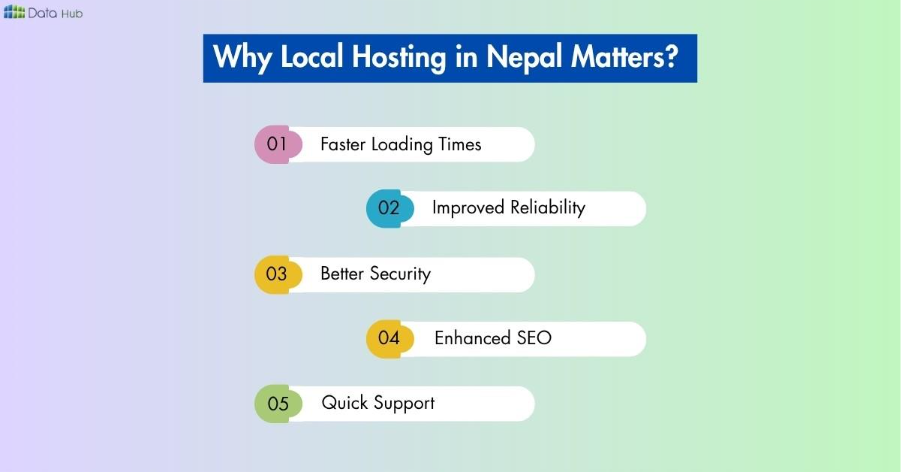
For businesses in Nepal, where your hosting runs can be nearly as important as the type of hosting you choose.
DataHub Nepal has positioned itself as an in-country cloud and data center provider with certified infrastructure, dual data centers in Kathmandu and Butwal, and a service portfolio that includes public cloud, co-location, backup, and disaster recovery.
It is known for its high availability and functionality.
That local footprint matters for several reasons:
- easier alignment with Nepal-based business needs
- local support and communication
- infrastructure designed for local operation
- Increased confidence for businesses with in-country hosting options
For companies looking for the best VPS service in Nepal, such local infrastructure can be a real advantage.
What Makes DataHub a Practical Choice for Nepali Businesses?
DataHub does not mention itself as just another hosting seller. Its position
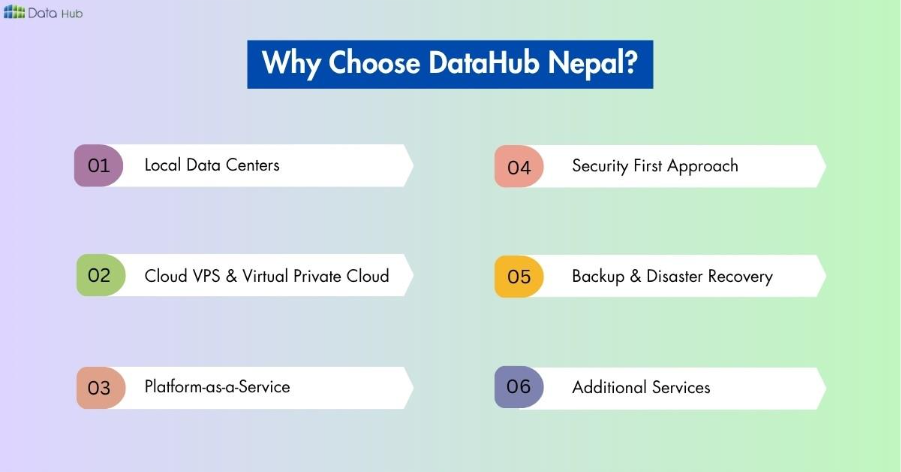
DataHub does not mention itself as just another hosting seller. Its position is built around secure, reliable, and scalable infrastructure designed to keep business operations flowing even during disruptions.
It has been providing hosting and data center services since 2012 and offers ISO/IEC-certified facilities, enterprise-level infrastructure, logging and monitoring, and disaster recovery support.
That is important because businesses are not just buying tools. They are buying confidence and reliability.
A Simple Way to Decide
Ask yourself these simple questions:
1. Do I need a remote desktop or a server?
If your answer is remote desktop, choose RDP. If it is a server, think VPS.
2. Do I need to host something public or business-critical?
If so, a VPS will be the better option.
3. Do I want a scalable solution?
If yes, then VPS hosting gives your business more room to grow.
Conclusion
RDP and VPS are not competing for the same things. They are based on different business needs.
RDP is known for allowing access to a remote workspace. It is useful, familiar, and practical for your team when they need to access Windows environments from anywhere.
When it comes to web hosting options, VPS hosting is about building on a stronger foundation. It provides your business with a private virtual server environment with greater control, flexibility, and room for growth.
That is why the better choice is dependent on what your business is trying to achieve. If you want day-to-day remote desktop access, RDP will be sufficient.
If you are looking to host, scale, customize, and run real business workloads, VPS hosting is usually the smarter option in the long run.
For businesses in Nepal seeking infrastructure backed by local expertise, certified facilities, and a focus on reliability, DataHub Nepal offers a range of services and is worth considering.
FAQs
RDP is a way to connect to and use a remote Windows computer or server over a network.
VPS hosting is a virtual server environment with its own operating system and resources for hosting websites, apps, and server workloads.
A VPS is a virtualized server environment used to host, and RDP is a software used to remotely access and control a graphical user interface on a computer.
VPS hosting is usually better because it is designed for hosting and server control.
Yes. If you have a Windows VPS, you can access it through RDP.
A Nepal-based provider may offer more relevant local support, in-country infrastructure context, and business continuity advantages for Nepal-based operations.
