

Web hosting may appear confusing to anyone who is starting a site.
One can easily believe that since your site is online, then all is well, but that is never the case.
You can lose speed, security, and even the length of your entire site by picking up an inappropriate hosting plan or committing inexperienced errors.
It is important to understand web hosting, as this may affect the performance of your website, the level of security, and ease of management.
You can be a freelancer or a small business owner, or even a developer in Nepal, but knowing the basics can save you the expensive downtime, lost data, and bad user experience.
Here in this blog, we are going to discuss what web hosting is, how it is done, and the most frequent startup errors that would put your site at risk.
At the end, you will understand how to select the appropriate hosting and will not get into the traps that a newcomer falls into.
Table of contents
- What is Web Hosting?
- How Does Web Hosting Work Behind the Scenes?
- Types of Web Hosting Explained
- Beginner Mistakes That Could Cost You Your Entire Site
- Why Local Hosting in Nepal Matters?
- How to Choose the Right Hosting Provider in Nepal?
- Why DataHub Nepal Is a Smart Choice for Beginners?
- Conclusion
- FAQ
What is Web Hosting?
Web hosting can simply be described as the service provider who ensures that your webpage is visible on the internet.
Consider it as renting space on a computer known as a server.
This server archives all your web data files, pictures, text, video, and code such that anybody who types up your web address can access your web immediately.
- Your site is on the Internet and available 24/7.
- Your files are saved in a secure server, which is usually a data center.
- Your site will be able to manage visitors, traffic, and interactions.
Without web hosting, your site would be on your personal computer only, and that is not a reliable and secure place where other people can get to view your site.
The most common and effective way to make certain that your webpage is fast, secure, and stays online is by selecting the appropriate hosting provider, which is more crucial to Nepali companies and startups that would prefer their local audience to enjoy this experience to the fullest.
How Does Web Hosting Work Behind the Scenes?
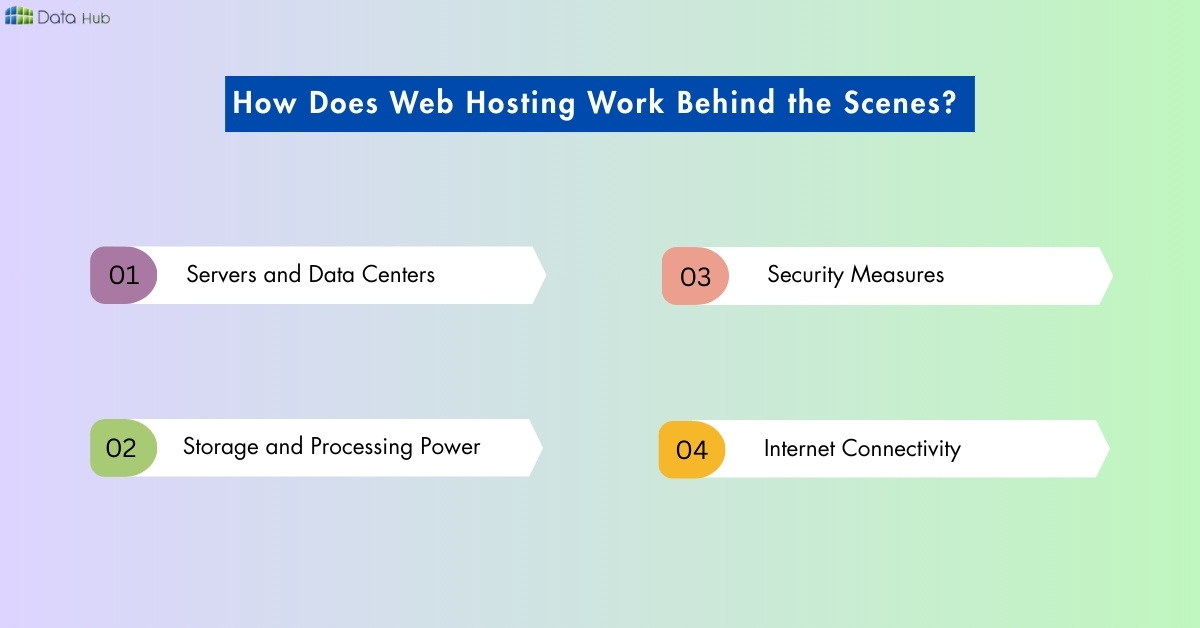
While web hosting may seem like magic, it’s actually a combination of hardware, software, and networks working together.
When someone types your website address in a browser, their request travels to the server where your website is stored.
The server then sends the files back to their browser, so they can view your site.
Behind the scenes, web hosting involves several key components:
- Servers and Data Centers: Your website lives on a physical server, usually in a secure data center, which keeps it running 24/7.
- Storage and Processing Power: Servers use CPU, RAM, and storage to deliver content quickly. If these resources are shared, your website can slow down.
- Security Measures: Firewalls, malware protection, and backup systems keep your website safe from attacks.
- Internet Connectivity: Fast and stable connections ensure users can access your website without delays.
Understanding these basics helps beginners see why the right hosting choice, like VPS, cloud, or local data center hosting in Nepal, can make a huge difference in speed, reliability, and security.
Types of Web Hosting Explained
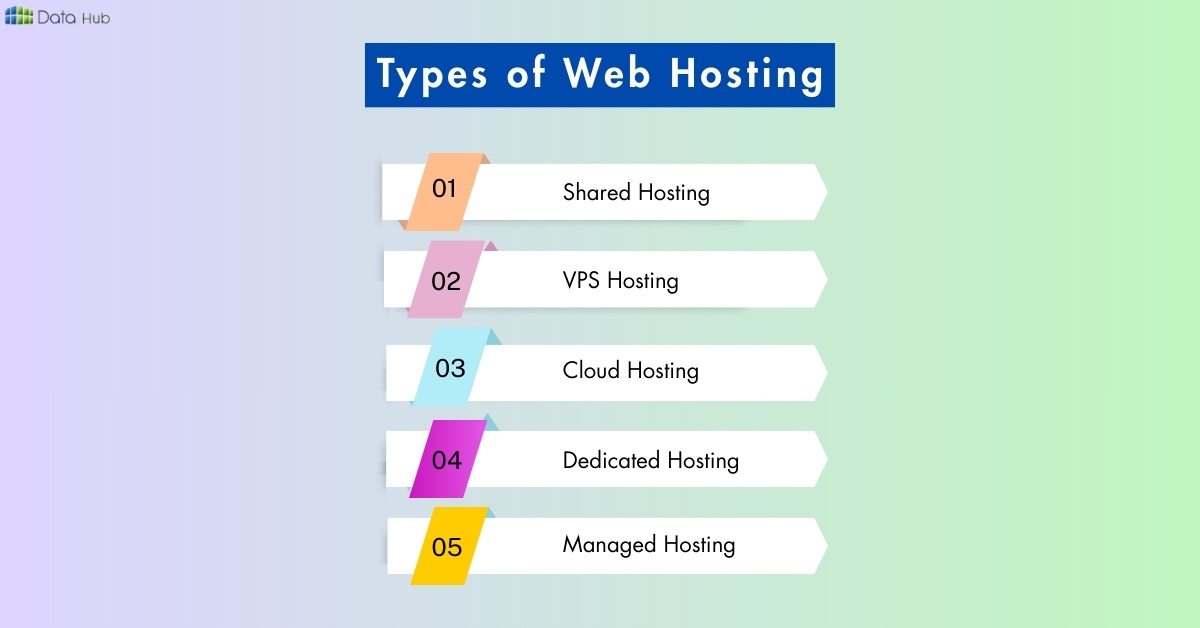
Not all web hosting is the same. Choosing the wrong type can slow down your website, reduce security, or even cause downtime. Here are the main types of hosting beginners’ encounters:
- Shared Hosting: Multiple websites share the same server resources. It’s cheap but it can be slow and less secure. Perfect only for small or personal sites.
- VPS Hosting (Virtual Private Server): Provides dedicated resources on a shared server. Your website runs independently, offering better speed, reliability, and security compared to shared hosting.
- Cloud Hosting: Your website is hosted across multiple servers, making it scalable and highly reliable. Ideal for websites expecting growth or fluctuating traffic.
- Dedicated Hosting: You rent an entire server just for your website. This is powerful but more expensive and usually needed only for large websites or businesses.
- Managed Hosting: The provider takes care of server setup, maintenance, security, and backups. Beginners or businesses with limited tech knowledge often prefer this.
Understanding these options helps you choose the right hosting for your website’s speed, security, and performance, especially if you want your site optimized for Nepali users.
Beginner Mistakes That Could Cost You Your Entire Site
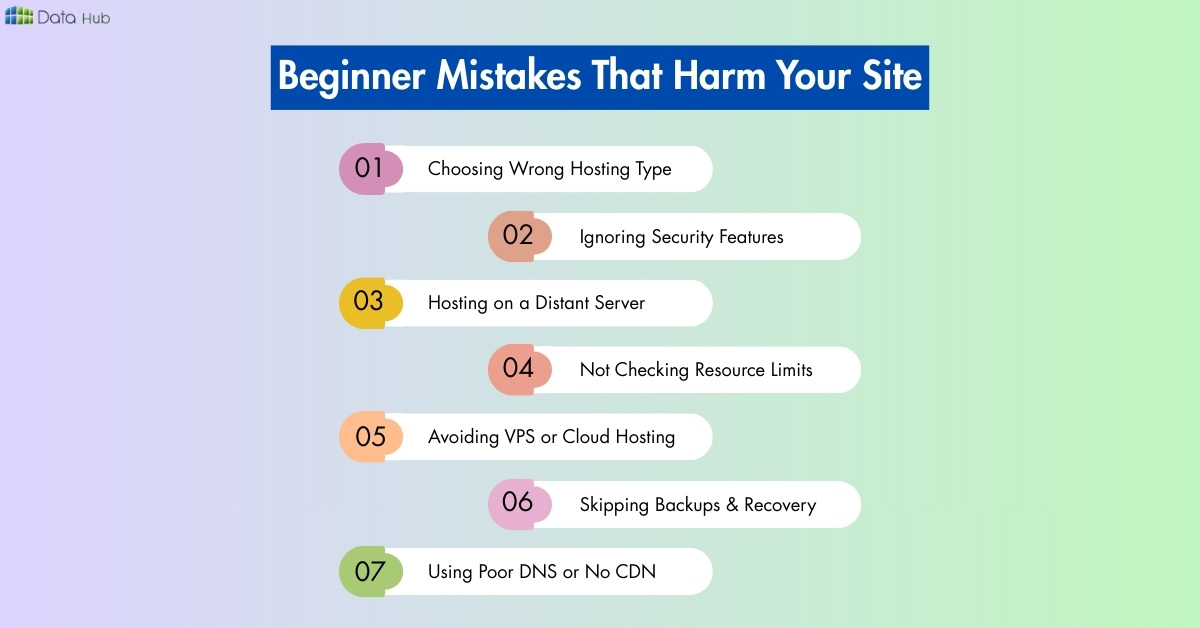
Even small mistakes in web hosting can lead to slow websites, downtime, security breaches, or even total loss of your site.
Here are the most common beginner errors and why they matter:
1. Choosing the Wrong Hosting Type
Picking the cheapest or wrong hosting type can hurt performance. Shared hosting may seem affordable, but it often slows up your site and offers limited security.
Choosing VPS or Cloud (VPS) ensures better speed, reliability, and control.
2. Ignoring Security Features
Neglecting security measures like Firewall-as-a-Service, WAF-as-a-Service, Malware Protection, or Ransomware Protection (NeuShield) can make your site vulnerable to attacks. Without them, your website’s data and reputation are at risk.
3. Hosting on a Distant Server
Hosting outside Nepal increases latency and slows your website for local visitors. Using a local data center improves load times, user experience, and SEO for Nepali users.
4. Not Checking Resource Limits
Websites need enough CPU, RAM, and storage. Beginners often ignore these limits, causing crashes or slowdowns when traffic spikes. VPS and Virtual Private Cloud plans.
5. Avoiding VPS or Cloud Hosting Due to Fear
Many beginners think VPS or clouds are too complicated. Platforms like Yeti Cloud (Platform-as-a-Service) make it simple, secure, and reliable for growing websites.
6. Skipping Backups & Disaster Recovery
Not setting up Backup as a Service or High Availability & Disaster Recovery (SIOS) can turn a minor issue into a major disaster. Regular backups prevent data loss and downtime.
7. Using Poor DNS or No CDN
Slow DNS resolution or the absence of a Content Delivery Network (CDN) can make your website load slowly, frustrating visitors and hurting SEO.
Optimizing DNS and using a CDN improves speed and performance globally and locally.
Why Local Hosting in Nepal Matters?
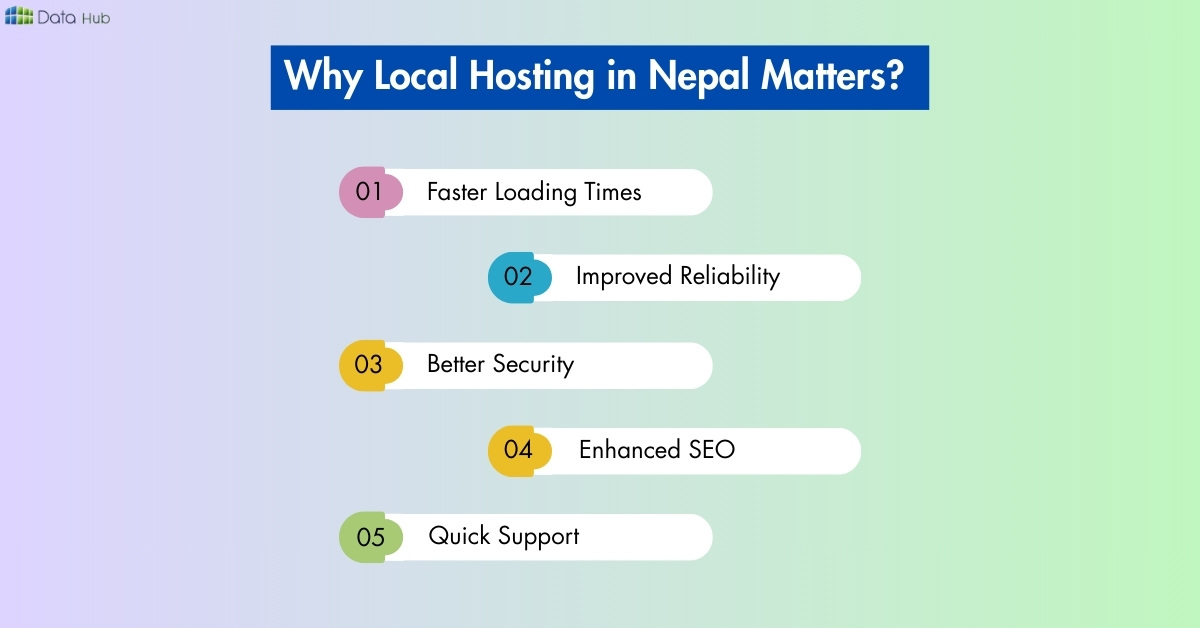
For websites targeting Nepali users, hosting locally can make a big difference. Using a server in a Nepali data center ensures faster load times, better reliability, and an improved user experience.
Here’s why local hosting matters:
- Faster Loading Times: Visitors in Nepal experience quicker page loads because the server is nearby, reducing latency.
- Improved Reliability: Local servers are easier to monitor and maintain, which reduces downtime.
- Better Security: Local hosting providers often include advanced protections like Firewall-as-a-Service, WAF-as-a-Service, Malware Protection, and Ransomware Protection (NeuShield).
- Enhanced SEO: Search engines favor fast-loading websites, so local hosting can help improve rankings for Nepali searches.
- Quick Support: Technical issues can be resolved faster with local support compared to overseas providers.
By choosing a local hosting provider like DataHub Nepal, businesses, developers, and startups can ensure their websites remain fast, secure, and reliable, avoiding common pitfalls that come with foreign servers.
How to Choose the Right Hosting Provider in Nepal?
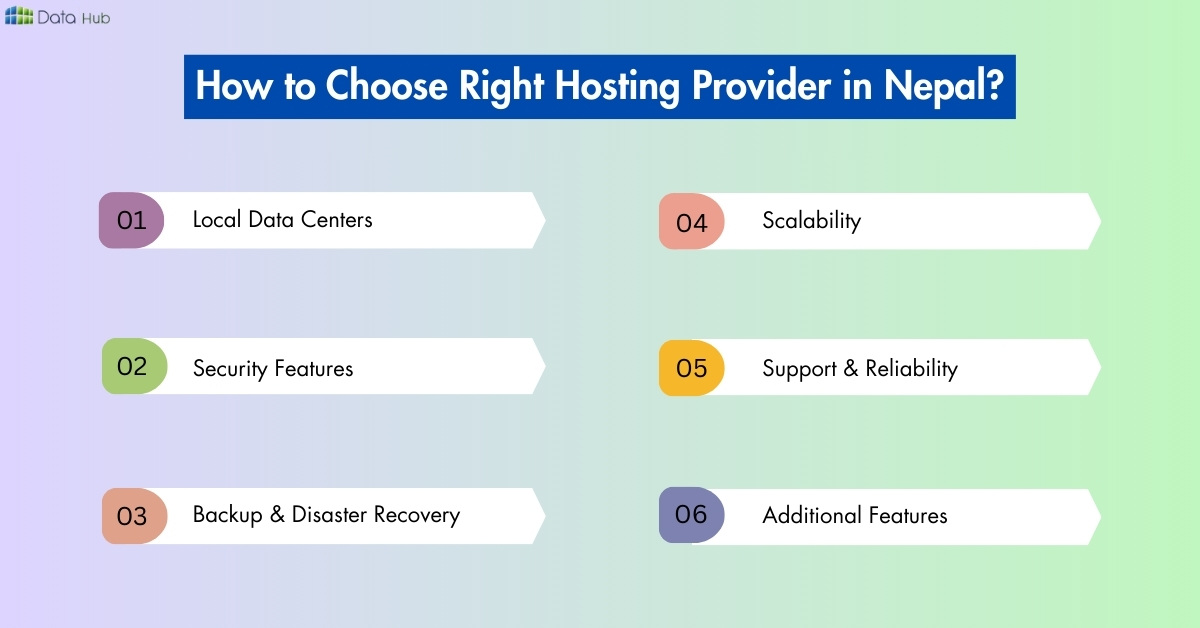
Picking the right hosting provider is crucial for website speed, security, and reliability. Here are key factors to consider when choosing a provider in Nepal:
- Local Data Centers: Hosting locally improves loading speed, reduces latency, and ensures better performance for Nepali visitors.
- Security Features: Look for providers offering Firewall-as-a-Service, WAF-as-a-Service, Malware Protection, and Ransomware Protection (NeuShield) to keep your website safe.
- Backup & Disaster Recovery: Services like Backup as a Service and High Availability & Disaster Recovery (SIOS) help protect your data and prevent downtime.
- Scalability: Ensure the provider offers VPS, Cloud (VPS), or Virtual Private Cloud options that allow you to upgrade resources as your website grows.
- Support & Reliability: Check for 24/7 customer support and high uptime guarantees. Quick support is essential in case of technical issues.
- Additional Features: Features like CDN integration, DNS management, object storage, or Yeti Cloud (Platform-as-a-Service) can further improve website speed and reliability.
Choosing a hosting provider that balances performance, security, and support ensures your website is fast, reliable, and ready to grow.
Why DataHub Nepal Is a Smart Choice for Beginners?

For beginners in Nepal, choosing a reliable hosting provider can feel overwhelming. DataHub Nepal makes it simple by combining performance, security, and local support in one package.
Here’s why DataHub Nepal stands out:
- Local Data Centers: Your website is hosted close to your audience, improving speed and reducing latency.
- Secure Hosting: Advanced features like Firewall-as-a-Service, WAF-as-a-Service, Malware Protection, and Ransomware Protection (NeuShield) keep your website safe.
- Backup & Disaster Recovery: With Backup as a Service and High Availability & Disaster Recovery (SIOS), your data is protected, and your website stays online even during unexpected issues.
- Flexible VPS & Cloud Solutions: Options like Cloud (VPS), Virtual Private Cloud, and Yeti Cloud (Platform-as-a-Service) let beginners scale easily without technical headaches.
- Support for Beginners: Local technical support is available to guide you through setup, optimization, and troubleshooting.
By choosing DataHub Nepal, beginners can launch and manage websites confidently, knowing they have a fast, secure, and reliable hosting solution tailored for Nepal’s digital environment.
Conclusion
Web hosting may seem simple at first, but the wrong choices can lead to slow websites, security breaches, or even the loss of your entire site.
Beginners in Nepal often make mistakes like choosing the wrong hosting type, ignoring security, or skipping backups, risks that can be avoided with the right knowledge and provider.
By understanding what web hosting really is, how it works, and which common mistakes to avoid, you can protect your website, improve speed, and ensure a smooth experience for your visitors.
Hosting locally in a Nepali data center with scalable solutions like VPS, Cloud (VPS), Virtual Private Cloud, and Yeti Cloud (Platform-as-a-Service) adds reliability, security, and faster performance.
Choosing a trusted provider like DataHub Nepal ensures your website is safe, fast, and ready to grow, without the stress and risks that beginners often face.
Don’t wait for a crash or security breach to learn these lessons; make the right hosting choice today.
FAQ
Web hosting is a service that stores your website files on a server so they can be accessed online 24/7.
For beginners, VPS or Cloud (VPS) hosting from a local data center offers the best balance of speed, security, and reliability.
Local hosting reduces latency, improves website speed for Nepali users, and allows faster support when needed.
Yes. Using Backup as a Service and High Availability & Disaster Recovery (SIOS) protects your website from data loss and downtime.
Use VPS or cloud hosting, enable caching, integrate a CDN, and ensure resources like CPU and RAM are sufficient.
Absolutely. Features like Firewall-as-a-Service, WAF-as-a-Service, Malware Protection, and Ransomware Protection (NeuShield) help keep your site safe.
Yes. With VPS, Virtual Private Cloud, or Yeti Cloud (Platform-as-a-Service), you can easily upgrade resources as your traffic increases.
